01
The project is losing control
Development appears to continue, but deadlines keep moving, priorities change on the fly, and the owner cannot see the real cause of delays or who is accountable.
For business owners and executives
I help create complex information systems from initial idea to working product. If a project is already underway, I bring clarity, restore control, and help drive it to completion.
Executive brief
Focus
time, risk, budget
01
Where control is lost
Requirements, roles, architecture, vendors, process, or communication.
02
What puts time and budget at risk
Separate material risks from the noise of tasks, chats, and assumptions.
03
Which next step will move the project forward
Build a sequence of actions that both the business and delivery team understand.
Outcome
A clear action plan: what to fix, who owns it, and where to review progress.
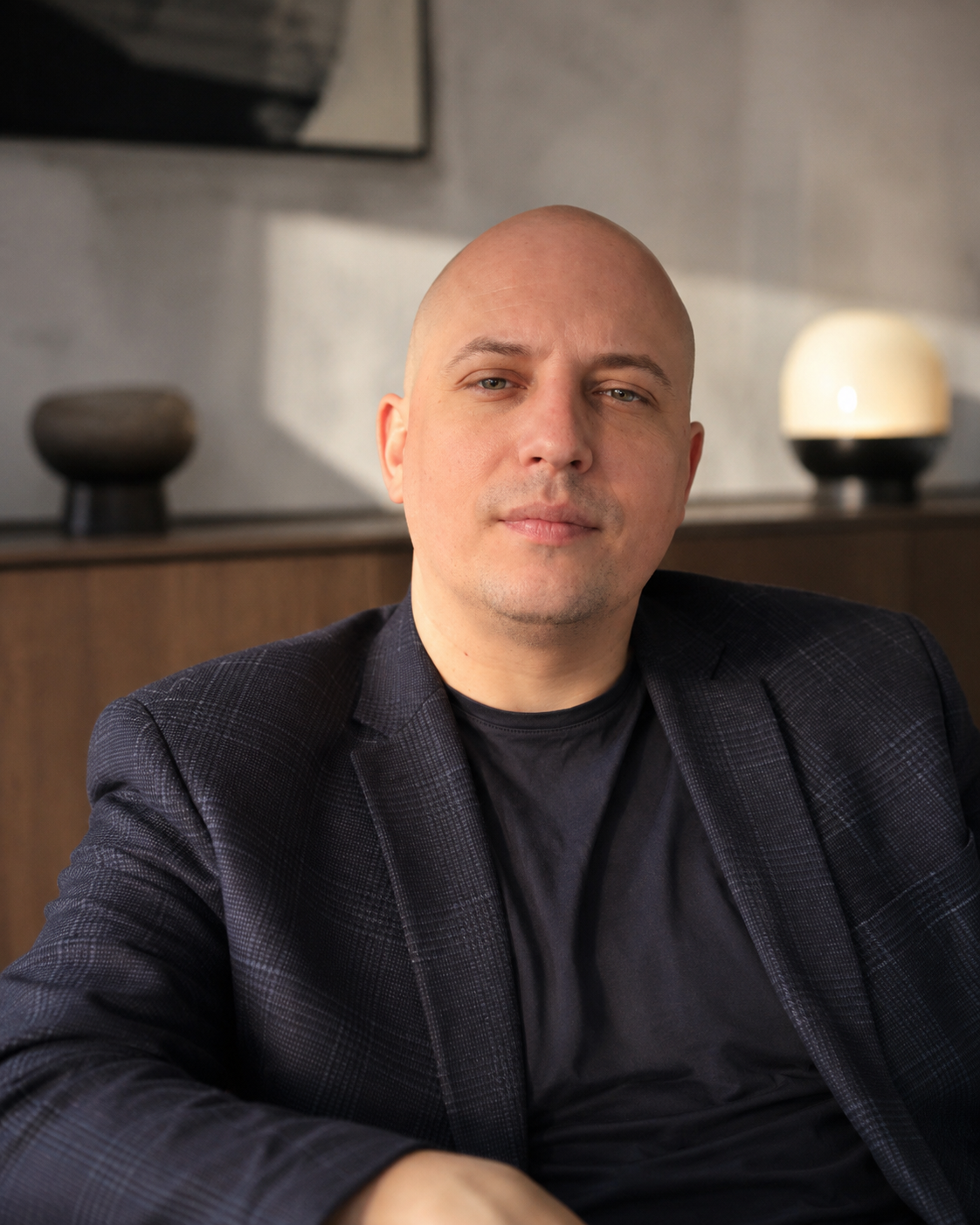
For more than 20 years, I have helped create and evolve complex information systems, from the first requirements through implementation and ongoing support.
I enjoy learning a new domain, bringing order to an existing project, or designing a system from scratch. My job is to make the business, team, and technology work as one system.
Strong projects are built not only on technology, but on process understanding, clear agreements, and disciplined systems thinking. My goal is not merely to start development, but to create a solution that works today and can evolve tomorrow.
If a project is consuming money, time, and attention without giving you a clear view of what is happening, I help diagnose the situation, restore control, and define the next steps.
Development appears to continue, but deadlines keep moving, priorities change on the fly, and the owner cannot see the real cause of delays or who is accountable.
Updates contain plenty of technical detail but little management clarity: what is done, what remains, how much more time and budget are needed, and where the actual risks are.
Requirements, roles, priorities, and decisions are scattered across chats, spreadsheets, and individual knowledge. The team argues while the business keeps paying for uncertainty.
I turn an idea into a viable concept, requirements, and an implementation plan, then help take it from the first discussion to a working information system.
I do not add process for its own sake. I bring structure where it changes delivery time, budget, risk, and business outcomes.
When to reach out
You have an idea for a product or internal system but no clear way to turn it into a working solution.
What I do
I take the idea to a coherent concept: learn the domain, formalize requirements, design the architecture, define delivery stages, and create a sound foundation for development.
When to reach out
The company has grown, but day-to-day work still depends on spreadsheets, chats, and manual operations.
What I do
I help turn business processes into a digital system by defining workflow stages, participant roles, documents, control points, and requirements for the future solution.
When to reach out
The project is delayed, the budget keeps growing, vendors give conflicting answers, and the real causes are unclear.
What I do
I analyze the architecture, processes, team, vendors, and current state of delivery to identify root causes and produce an understandable action plan.
When to reach out
The team is busy, but the business cannot tell whether the project is actually moving toward a useful result.
What I do
I organize the work of internal teams and vendors, establish delivery processes, support key technical decisions, and make progress transparent to the business.
When to reach out
Development is nearing completion or the product is already live, and you need to avoid chaos after the first release.
What I do
I prepare the product for launch, organize implementation, collect feedback, define the next stages of development, and keep the project under control as it grows.
When to reach out
Before changing a vendor, increasing the budget, starting a new phase, or making another high-impact decision.
What I do
I provide an independent review, identify strengths and weaknesses, assess risks, and prepare recommendations for an informed decision.
The engagement depends on the task, from project diagnostics and technical leadership to complete end-to-end delivery.
I establish what is really happening, identify the causes of problems, assess risks, and clarify which actions will actually move the project forward.
I join as an external technology leader: contribute to key decisions, oversee vendors, align the business and delivery team, and keep the project under control.
I help a CTO, team lead, or delivery team build better ways of working with less task chaos and more accountability, predictability, and independence.
When analysis alone is not enough, I bring in a team and take responsibility for design, development, implementation, and ongoing evolution of the system.
These are not just software development projects. Each is a story of turning a complex operating domain into a clear, manageable information system.
Starting point: The city needed more than a new information system. It needed a platform connecting educational routes, institutions, tourism clubs, and user accounts while supporting regular releases without losing delivery control.
My role: I joined as technical lead. I organized a distributed development team, formalized requirements, contributed to system architecture, made technical decisions, established delivery processes, introduced development, testing, and release infrastructure across dev, staging, and production, and oversaw quality and releases.
What changed: The project gained a clear evolution path, a manageable delivery process, and reliable infrastructure for regular releases and continued scaling without constant manual intervention.
Starting point: The client needed a unified parking management system connecting license plate recognition cameras, barriers, payment terminals, and access rules while keeping operations transparent and convenient for staff and visitors.
My role: I designed the system architecture and led development. I established roles and access rights, user action logging, integrations with barriers, plate recognition, and live video, as well as tariffs, access rules, allowlists, blocklists, temporary passes, and approval workflows through a Telegram bot.
What changed: The parking operation gained a single control center, transparent access and transaction oversight, flexible tariffs and pass rules, and a system that can evolve without constant manual reconfiguration.
Starting point: The operation needed to replace fragmented records and manual oversight with a unified MES that reflected actual production processes, employee output, and current operating data.
My role: I joined as technical lead, studied real workflows across production units, organized requirements discovery and formalization, documented business processes, contributed to system architecture, coordinated the team, and shaped MES logic around the way the enterprise actually worked.
What changed: Management gained greater process transparency, less manual control, a consistent system model, and a strong foundation for further digitization of the enterprise.
Starting point: Companies needed more than software. They needed tools that automated operations, reduced manual work, and helped launch new digital products faster.
My role: I joined when an idea needed to become a working product. I clarified business goals, formalized requirements, defined product boundaries, set priorities, and organized collaboration between stakeholders and developers so projects reached launch instead of remaining in endless discussion.
What changed: Fragmented ideas and shifting requirements became a clear product roadmap, a transparent delivery process, and a working system that could be launched and developed further.
Business owners do not need technical fog. They need to know what is happening, who owns each decision, and which next steps will produce a result.
I quickly establish the current state of the project: goals, processes, team, vendors, architecture, constraints, and root causes of problems.
I formalize requirements and define roles and ownership so the business and team share the same understanding of the expected outcome and acceptance criteria.
I set priorities and build a clear plan: what must happen now, what can wait, and which decisions materially affect project success.
I structure the work of the team or vendors so the business sees progress toward an outcome rather than development activity for its own sake.
I prepare the project for launch, verify readiness, assess risks, support implementation, and help the organization through the first stage of operation.
After launch, I help analyze feedback, set new priorities, and keep the system manageable as the product and organization grow.
Enough technical depth to make sound decisions and enough management experience to carry them through to a working result.
Describe the situation in two or three sentences: what is happening, where the difficulty started, and what concerns you most. I will help identify where to begin and what deserves attention first.